Global Trade
Stop Quoting with Stale Tariffs: Fix Your HS Code Workflow
Jul 24, 2026
Export Import
Import duty isn't one flat number, it depends on your HS code, customs value, and country of origin. Here's the exact formula and a worked example.
July 24, 2026Last updated October 12, 2026By Exim Agent11 min readView as Markdown

Picture an exporter who quotes a US buyer a landed price from FOB cost plus freight, without working out the duty. If the product's tariff line carries an extra tariff on top of the standard rate, that can wipe out most of the margin on the order.
Import duty isn't one flat percentage you can memorize and reuse. It depends on four things at once the exact HS/HTS classification, the customs value, the country of origin, and whichever additional tariffs happen to be stacked on that product right now and in 2026 that last part changes more often than most importers can keep track of. Once you've got those four pinned down, the multiplication itself takes ten seconds the part that trips people up is not missing one of them.
Before you can calculate anything, gather these five inputs:
Have these five on hand and a duty calculation usually resolves in one pass instead of several rounds of guessing.
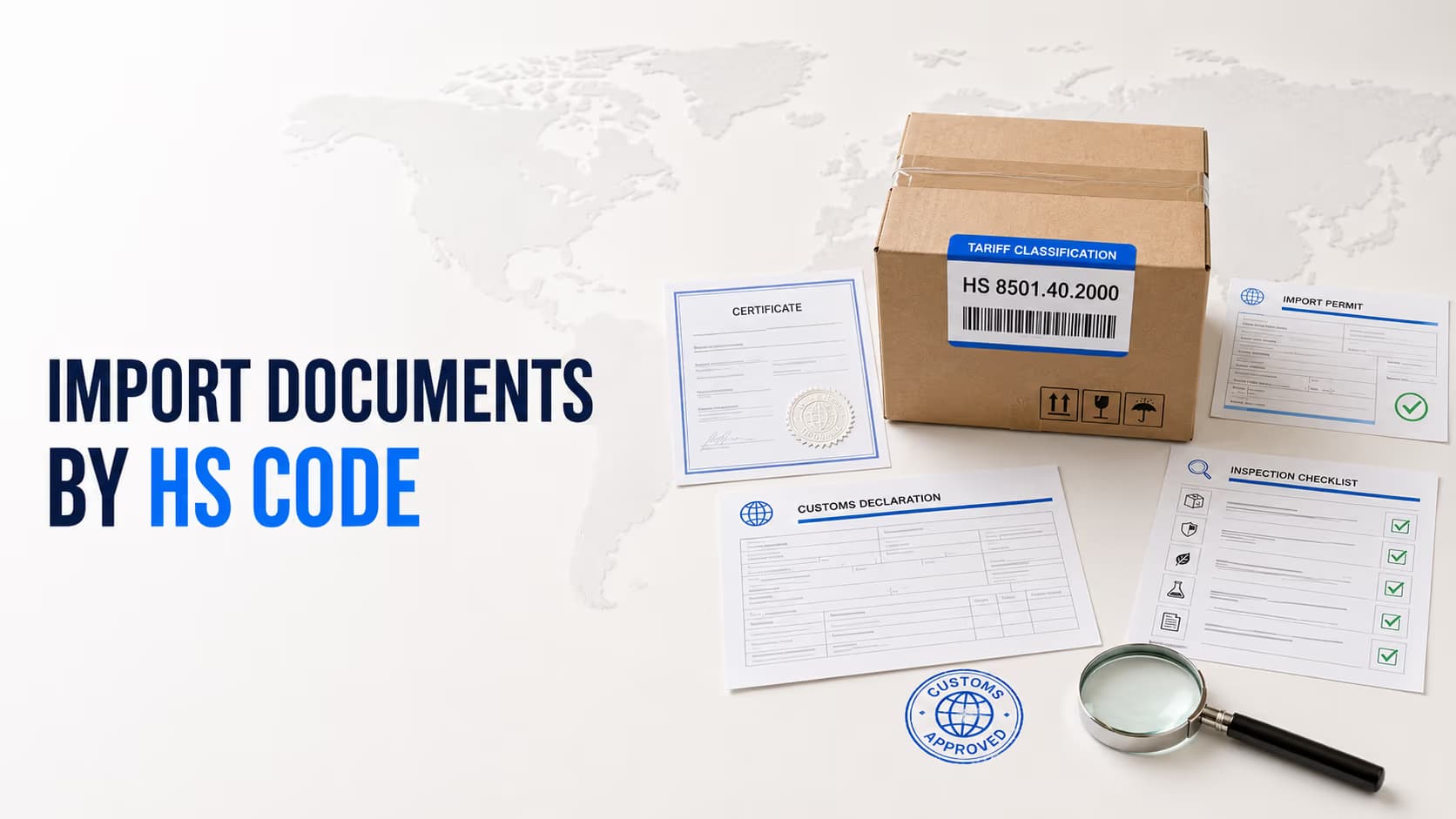
Every country publishes a tariff schedule that assigns a duty rate to each full-length national tariff line in the US, that's the Harmonized Tariff Schedule (HTS), maintained by the U.S. International Trade Commission. Two products can share the same 6-digit international subheading and still carry different rates once you get to the 8th, 9th, or 10th digit, because that's where a country splits a subheading by material, use, or size to apply a different rate.
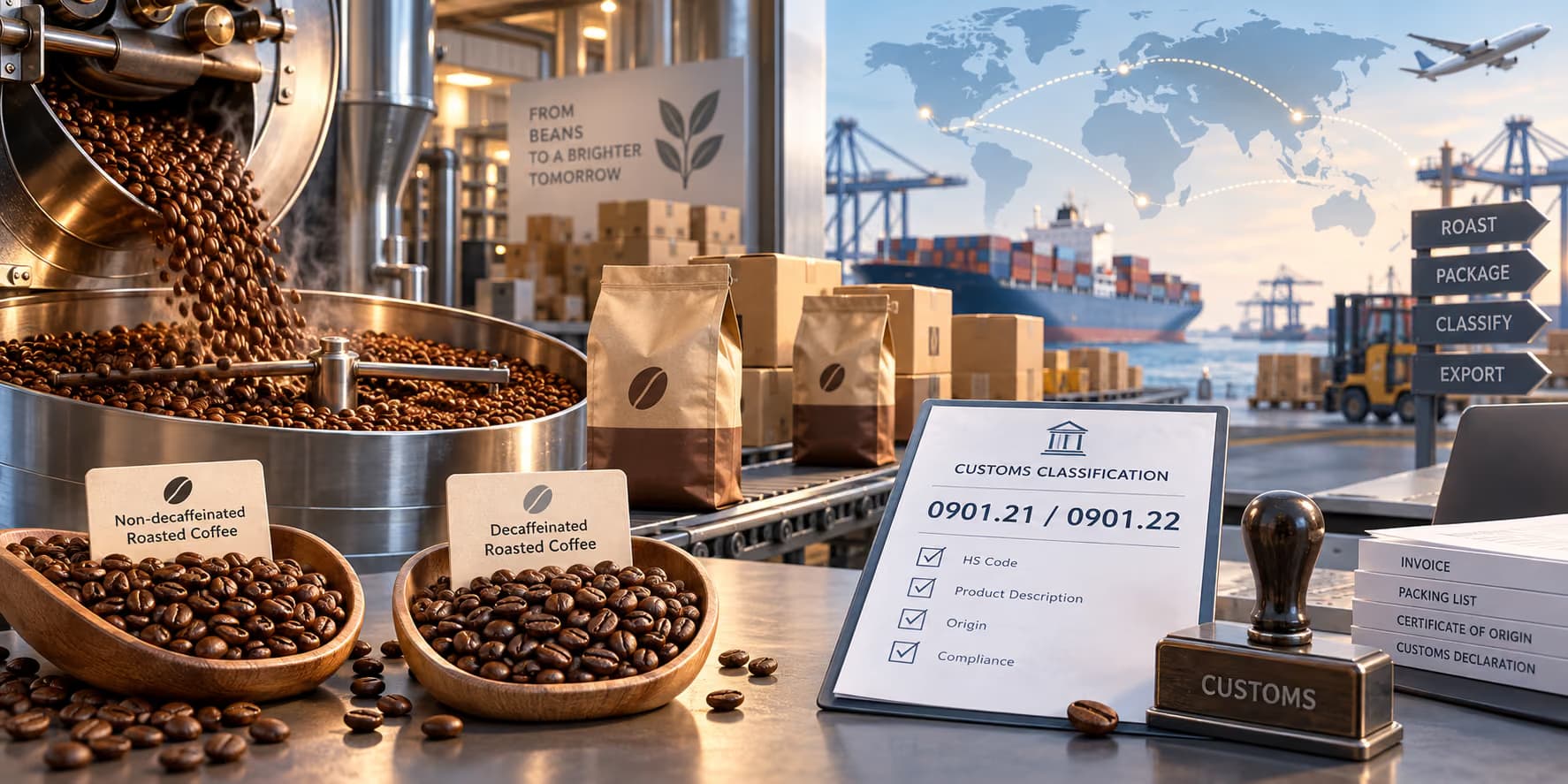
This is exactly why an approximate classification isn't good enough for a duty calculation "coffee" or "furniture" gets you to the right chapter, but the actual rate lives at the full national code. If you haven't nailed the exact HTS line yet, that's the step to fix first (our HS code lookup guide walks through classifying a product to the full 6-digit subheading before you ever look up a rate). If you're unsure how the US 10-digit line relates to the 6-digit code, see HTS vs HS code.
Most tariff lines carry a general (MFN most-favored-nation) rate that applies by default, plus a separate, much higher "Column 2" rate reserved for a short list of countries the US doesn't extend normal trade relations to (currently Cuba, North Korea, Russia, and Belarus). For nearly every other trading partner, you start from the Column 1 general rate and then layer on anything origin-specific.

Three practical ways to find the rate once you have the full HTS code:
Whichever source you use, check the as-of date. The base HTS rate itself barely moves, but from late 2024 through mid-2026 the US layered and re-layered several country- and sector-specific surcharges on top of it memorizing last quarter's total rate is a common way importers under-quote a shipment today.
The core formula is simple; getting every input right is where the work is:
Import duty = Customs value × Applicable duty rate (plus any specific or compound-duty component, plus any additional tariff that stacks on top).
Two identical products with the same HTS code can owe completely different duty depending on where they're from, for three separate reasons:
Origin also gets genuinely hard to pin down for products assembled from components sourced across several countries the origin is wherever the last substantial transformation happened, which is a legal test, not just "where the factory is."
Beyond the base HTS rate, a shipment can pick up several more charges depending on the product and market:
None of these move in isolation from the base HTS rate they stack on top of it. Ask five importers what the duty on a product actually is and you'll often get five different answers, because each one stopped adding at a different layer

Figures below are an illustrative example only always confirm the live rate for your product and shipment date before filing; the mechanics of the calculation are what matters here, not the exact percentages, which shift often in the current environment.
Say you're importing 500 liters of extra virgin olive oil from Spain to the US, HTS subheading 1509.20.20, with a customs value of $5,000 (FOB Spain)
Step | Detail |
|---|---|
HTS code | 1509.20.20 (extra virgin olive oil, retail containers under 18 kg) |
Customs value | $5,000 (FOB) |
Country of origin | Spain (EU) |
Base (Column 1) duty rate | $0.05/kg on contents + immediate container |
Additional country/sector tariff | Section 301 (EU origin, from July 24, 2026): where the MFN rate is below 10%, the 301 duty brings the combined rate up to 10% of the customs value. Ask your broker or check CBP guidance for the exact amount on your entry. Source: USTR notice in the Federal Register. |
FTA/preference applicable | None currently for EU under a US FTA |
Total duty | Base duty ($0.05/kg on contents and container) plus any Section 301 duty for this entry; confirm the exact amount with your broker |
Landed cost | $5,000 + total duty + freight/insurance + any applicable fees |
The point of the table isn't the dollar figure it's the sequence: classify to the full HTS line first, price it on the correct customs-value basis, apply the base rate, then check what else is stacked on top for that specific origin, before you ever quote a landed price to a buyer.
Instead of running these steps separately across three different lookup sites, EximAgent's Compliance agent handles the whole chain in one query, from tariff by HS code to surcharges:
1. Ask in plain language. Something like "what's the landed cost to import olive oil from Spain to the US" no need to already know the HTS code or which surcharges currently apply.
2. Classify the product first. Start by checking the full subheading with the HS code search before you price anything since, as covered above, the rate lives at the full code, not the general category.
3. It looks up the tariff for the HS code and origin you give it, so you can check the current rate before you quote.
4. It totals the landed cost customs value, duty, and applicable fees together so you get one figure to quote against, not three numbers to add up yourself.
Start on the free plan, no card needed. See pricing for which lookups use credits. Check the current duty rate for your product at hscode.eximagent.ai.
How do I calculate import duty from an HS code? Classify the product to its full national HTS/HS code, establish the customs value (transaction value, generally FOB for US imports), confirm the country of origin, then apply the base rate for that exact line plus any additional tariff currently stacked on that product and origin.
Is import duty calculated on FOB or CIF value? For US imports, duty is generally calculated on the FOB transaction value the price paid or payable for the goods themselves. Many other countries use CIF (which adds freight and insurance) as the customs value base, so the same shipment can be priced differently depending on the destination market.
What's the difference between import duty and VAT? Import duty is a tariff assessed on the customs value of the goods themselves under the HTS/HS classification. VAT (or GST) is a separate consumption tax some countries charge on top of the customs value plus duty. The US has no federal import VAT, but most other major import markets do.
Does country of origin affect the duty rate? Yes, significantly. Origin determines whether an FTA preference lowers the rate, whether a country-specific tariff stacks on top of it, or for a short list of countries whether the much higher Column 2 rate applies instead of the standard rate.
Do small shipments still get a duty-free exemption? No, and this is the change that's caught the most people off guard this year. The $800 de minimis exemption. (Section 321) was suspended indefinitely: for non-postal shipments from June 24, 2026, and for the international postal network from July 24, 2026. Low-value shipments that used to clear duty-free now go through normal entry and duty assessment.
Is there a free tool to check import duty by HS code? Yes. Start on the EximAgent free plan, no card needed. See pricing for which lookups use credits.
Calculating import duty by hand across five inputs and a stack of country-specific surcharges is exactly the kind of thing worth checking rather than assuming a single missed surcharge can erase the margin on an order before it ships. Ask EximAgent for the HS code and current duty rate for your product, with the reasoning shown, not just a number. Start on the free plan, no card needed; see pricing for which lookups use credits.
EximAgent Research writes practical guides on finding buyers, reading trade data and checking HS codes, tariffs and sanctions.
Enter your email to receive the latest trade insights, guides, and HS-code explainers from EximAgent Blog.