Global Trade
Lead Retrieval Software: From Badge Scan to Qualified Buyer
Oct 9, 2026
Global Trade
Sanctions screening can fail when lists, names and review decisions are treated as complete data. This guide explains common gaps and where human review remains necessary.
September 11, 2026Last updated October 1, 2026By Exim Agent3 min readView as Markdown

Sanctions screening is a control for identifying possible matches against a sanctions list. It is not a guarantee that a counterparty is safe, and it is not a substitute for a documented compliance decision.
The quality of a screening result depends on the list source, the data you submit, the matching method and the review applied to a possible match. A process that hides those limits can create false confidence.
What a screening result can and cannot say
A name screen can surface a possible match for investigation. It cannot establish identity from a name alone, and a clear result does not prove that every risk has been assessed. Record which list was checked, when it was checked and what information was used.
Challenge 1: list coverage and update timing
Lists change. A provider may use a different update schedule, scope or list version from another provider. Before relying on a result, confirm which source is included and the date of the latest update.
Keep the source and timestamp with the screening record. If a supplier was screened last month and the relationship continues, define when the next review is required. A historical clear result should not be presented as a current clearance.
Challenge 2: name variation and incomplete identity data
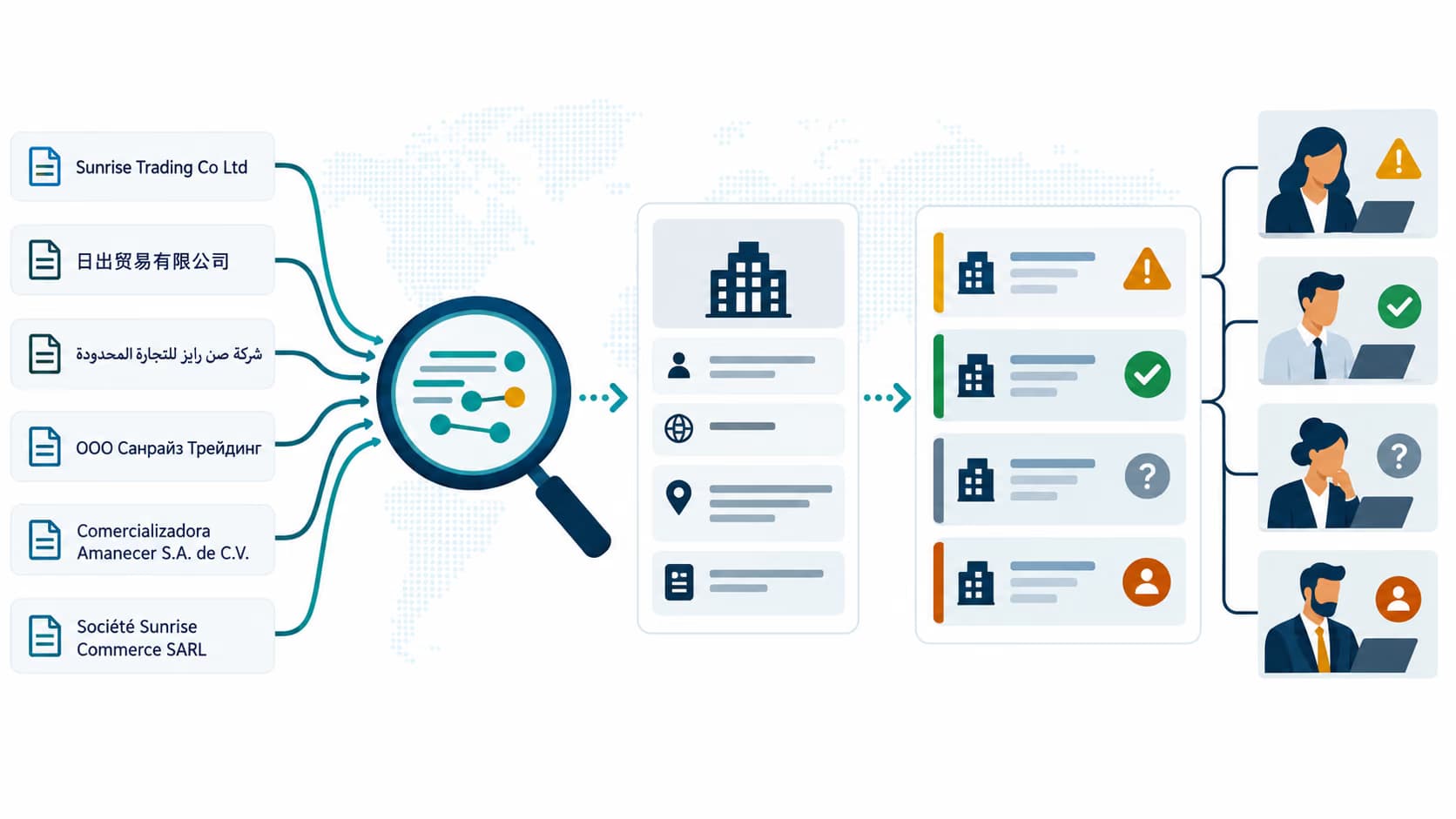
Names may be transliterated, abbreviated, reordered or recorded with different punctuation. A company can also have multiple legal names, trading names or addresses. Screening only one spelling can miss a relevant candidate; matching every similar name without context can create unnecessary alerts.
Capture supporting identifiers when available: legal name, country, address, registration number and known aliases. Separate the name that triggered a review from the identity evidence that resolves it.
Challenge 3: false positives and inconsistent review
A possible match is a review queue item, not a conclusion. Reviewers should compare available identifiers and document why the candidate is or is not the listed party. Different reviewers should reach comparable decisions from the same evidence.
Use clear dispositions such as potential match, false positive, unresolved or escalated. Include the reviewer, date, evidence considered and next action. Do not overwrite the original alert when new evidence arrives; retain the history.
Challenge 4: bulk screening creates operational gaps
Screening a list of counterparties introduces data-quality work before the matching step. Duplicate names, blank countries and inconsistent columns can make a batch result hard to interpret. Assign an owner for file preparation, review and escalation.
A bulk workflow should report the number submitted, the number with data errors, the number of possible matches and the number still awaiting review. Do not describe a batch as complete while alerts remain unresolved.
Challenge 5: unclear scope and overclaiming
Sanctions screening is one control in a wider process. A name check may not cover beneficial ownership, export controls, local restrictions or every watchlist. Explain the scope in the page, the operating procedure and the user interface.
For a practical first step, use the current [OFAC sanctions screening guide](https://eximagent.ai/docs/guides/sanctions-screening) to run an initial name screen and preserve the evidence. The guide is a workflow aid, not legal advice or a promise of comprehensive compliance coverage.
A short review checklist
- Confirm the list source and update date.
- Preserve the submitted name and identifiers.
- Check aliases, spelling and transliteration variants.
- Compare country, address and registration evidence.
- Record the disposition and reviewer.
- Escalate unresolved results before outreach or payment.
- Set the next review date when the relationship continues.
Good screening is transparent about uncertainty. A clear process makes it easier to investigate possible matches, explain a decision and repeat the check when the underlying data changes.
Publication note
This article describes process limits and review practices. It does not provide legal advice, certify a counterparty or claim that a single screen covers every sanctions or compliance obligation.
EximAgent Research writes practical guides on finding buyers, reading trade data and checking HS codes, tariffs and sanctions.
Enter your email to receive the latest trade insights, guides, and HS-code explainers from EximAgent Blog.