Economy
Automated Outreach: Effective Techniques for 2026
Apr 17, 2026
Economy
Evaluate an AI agent platform for global trade: compare specialist roles, data sources, context handoffs and human review controls.
December 4, 2025Last updated October 26, 2026By Davos Pham7 min readView as Markdown
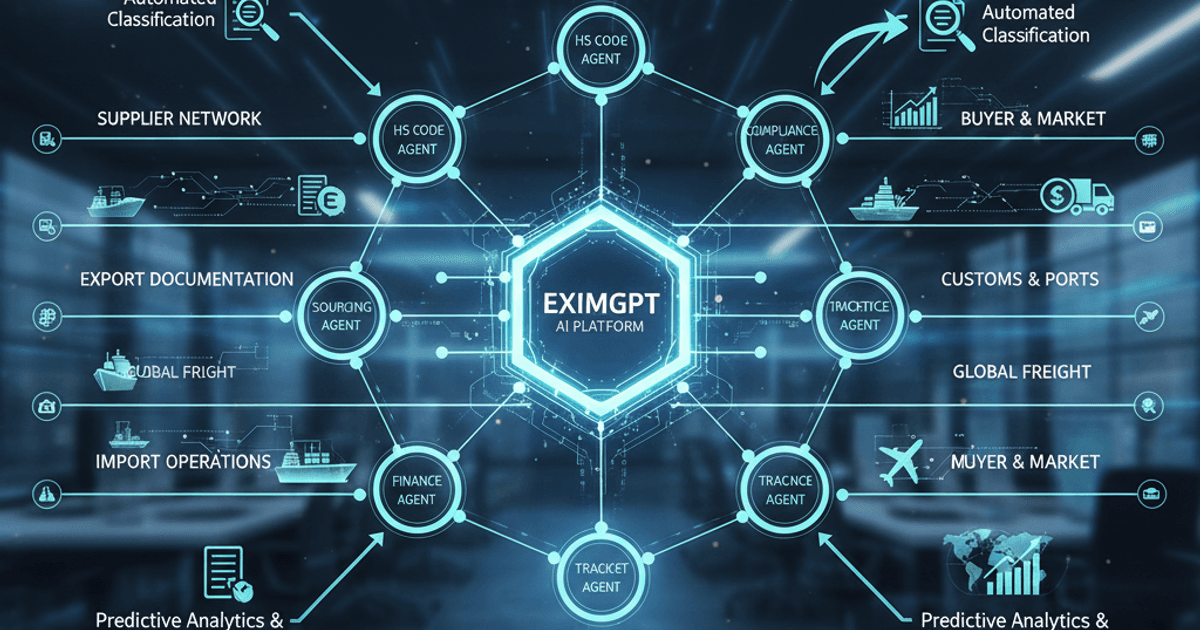
An AI agent platform for international trade should be evaluated against the work your business needs to do. Which specialist handles each part? What sources support the result? Does the context survive a handoff? Where can your team review, correct or stop the process?
These questions matter more than the number of agents a platform advertises. A useful AI team gives people a clearer basis for decisions, with defined responsibilities and outputs they can inspect.
This guide explains how to assess a platform before adopting it, using a focused business task and a practical evaluation checklist.
An AI agent platform connects AI models with tools, data sources and workflows. It can support tasks such as researching a company, examining trade activity or preparing information for a classification review.
A chatbot may help discuss those tasks. An agent platform can also use supported tools to gather information and prepare an output. The capabilities and limits depend on the product, available data and permissions.
An AI agent is software. It is different from an import agent, export representative or customs broker acting on behalf of a business.
For a trade team, the starting question is specific: can the platform help complete a defined job with evidence that someone can review?
An AI team brings specialists with different responsibilities into a connected working process.
EximAgent’s public positioning describes roles including Analyst for trade intelligence, Outbound for buyer discovery and outreach preparation, Inbound for inquiry response, Expo for event follow-up, and Compliance for classification and tariff research.
A list of roles is only the starting point. When evaluating a platform, examine how those roles work together:
Check which handoffs the product supports directly and which require someone to review and transfer information. Do not assume that every specialist can automatically trigger every other specialist.

Begin with a recurring business question rather than a broad request to “automate trade.”
For example, your team might need to understand a potential partner’s business, compare activity in a target market or prepare product information for an HS code review. Each job requires different inputs and evidence.
Define the expected output before testing. A company research task might require a concise profile with sources and open questions. It does not necessarily require a contact list, an outreach campaign or a recommendation to transact.
A platform fits when its supported capabilities match that job and its limits are clear.
Ask where important findings come from and whether the source is available for inspection.
For trade data, relevant questions include country coverage, the period represented, update frequency and the level of product detail. For company research, check whether a finding comes from the company’s own website, an official record or another source.
Keep observation dates beside the evidence. A recent website statement and an older shipment record may describe different periods.
A missing result should remain a data gap. It should not become a claim that a company has stopped trading, does not handle a product or is unsuitable for your business.
A useful output makes it possible to distinguish:
Suppose a company’s website lists a product category and a shipment record contains a related description. Those observations may justify further research. They do not prove that the company is currently seeking a supplier or can meet your requirements.
Look for language that reflects the strength of the evidence. An output that confidently fills every blank can be less useful than one that identifies the unanswered questions.
A handoff should preserve the information needed to understand the work.
If one specialist researches a company and another prepares a response, the second needs more than the company name. Relevant context may include the original request, product requirements, source links, dates, uncertainties and the reason for the proposed next step.
Check whether this context remains attached to the output or requires a separate manual record.
Also test corrections. If your team changes a requirement or identifies the wrong company, can the next stage use the corrected information? Avoid relying on a polished final draft when its underlying context is outdated.
Find out which actions produce a draft, which change a record and which communicate externally.
Your team should understand the approval points before using the platform for live work. Review controls are especially relevant when an output affects a quotation, customer communication or compliance-related decision.
Check whether a reviewer can correct a finding, reject an output or ask for more evidence. Keep research suggestions separate from decisions that require commercial or specialist judgment.
The platform’s ability to prepare an answer does not establish that the answer is ready to use.
Choose a small task with an output your team knows how to assess.
Consider this illustrative request:
Prepare a research note on a potential trading partner. Identify its operating business and relevant product activity, cite the sources and dates, and list the questions we need to resolve before a commercial discussion. Do not draft outreach or recommend approval.
Use an actual company only when your team is ready to review the evidence. The example is a test format, not a claim about a particular business.
Assess the result against five questions:
For a deeper review of partner-related evidence, see the supplier risk assessment checklist.
Start with the result you need to evaluate. Expand to a connected workflow once your team understands the output and its limits.
Before committing a wider process to a platform, ask:
Use a real task to test the answers. Product descriptions explain the intended experience; a controlled evaluation shows how that experience fits your own requirements.
If your chosen task is prospecting, the AI lead generation workflow for exporters explains the steps from buyer research to reviewed outreach. For the narrower task of identifying relevant importers, use Find Importers.
An AI team divides responsibilities among specialists and connects their work through shared context and handoffs. Evaluate whether those connections help complete your task rather than assuming that more agents produce a better result.
It can support research and preparation. Your team still decides how to interpret the findings, what information is missing and whether an action is appropriate. Some decisions require additional commercial or specialist review.
Start with a recurring task that has clear inputs and an output someone on your team can assess. Company research can be a useful starting point because the findings, sources and gaps can be reviewed before any external action.
Choose one trade task, define the expected output, and review the evidence before expanding the workflow.
Explore EximAgent’s AI team with those requirements in mind. Check the specialist roles, supported capabilities and review points against the job your business needs to complete.
EximAgent Research writes practical guides on finding buyers, reading trade data and checking HS codes, tariffs and sanctions.
Enter your email to receive the latest trade insights, guides, and HS-code explainers from EximAgent Blog.