Export Import
How to Calculate Import Duty Using an HS Code
Jul 24, 2026
Economy
How tariffs affect international trade and landed cost: tariff types, country of origin, US customs fees and a worked duty calculation you can reuse by HS code.
June 1, 2025Last updated October 13, 2026By Davos Pham5 min readView as Markdown
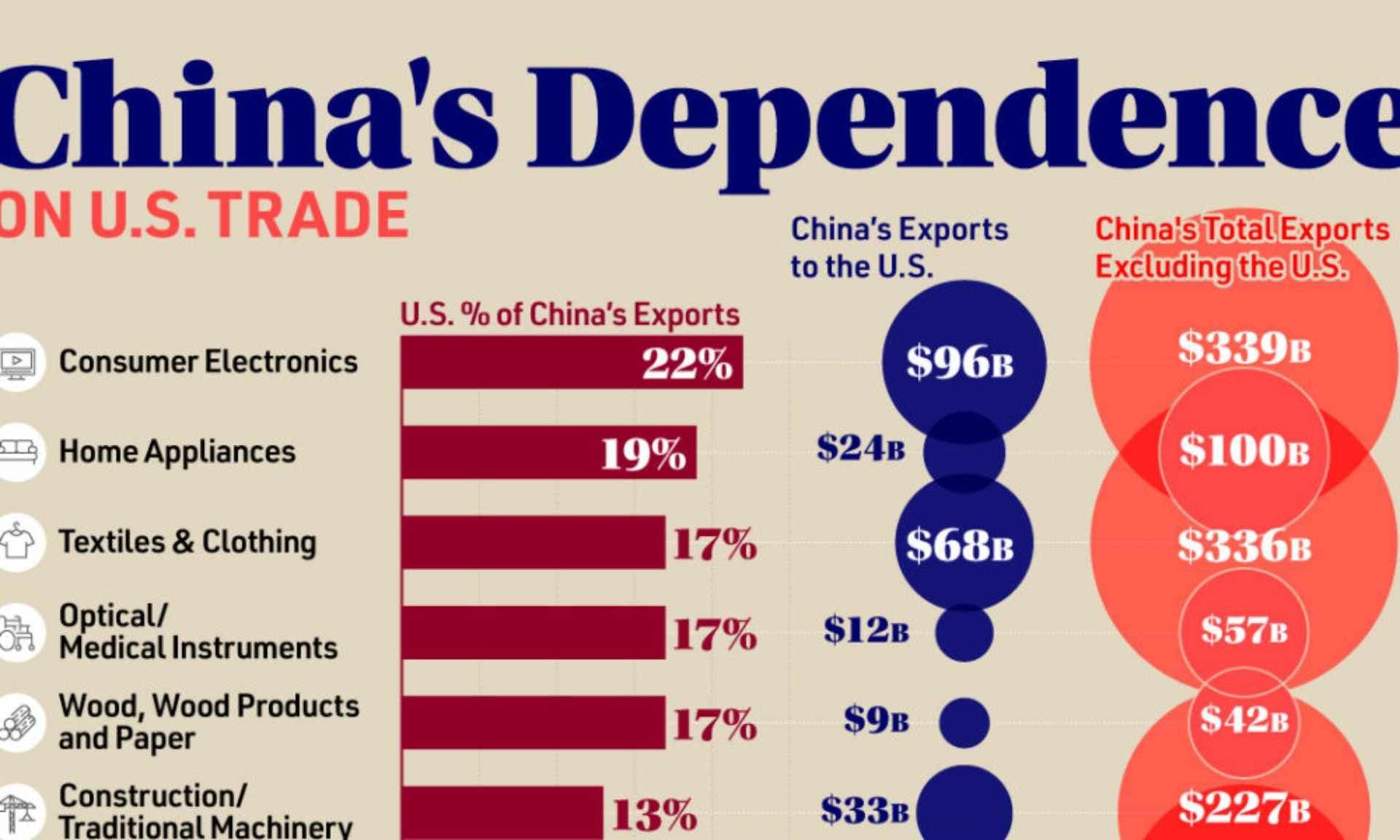
Tariffs affect international trade by raising the landed cost of imported goods: the duty is added to the product cost, freight and fees, which changes what buyers pay, which suppliers are competitive and where companies choose to source. For an importer, the practical question is how much a tariff adds to each unit once it lands.
A tariff is a tax a country charges on imported goods. Governments use tariffs to raise revenue, protect domestic producers and gain leverage in trade negotiations. The rate depends on the product's tariff code, its country of origin and any trade agreement or additional duty that applies.
The importer pays the duty when goods clear customs. That cost is either passed on in higher prices or absorbed as lower margin. Either way it changes the price at which a product can compete.
When duty on goods from one origin rises, products from other origins can become cheaper on a landed basis. Companies compare suppliers on landed cost, not ex-works price.
Announced changes can pull imports forward before a rate takes effect, or delay orders while a rate is under review. That creates uneven demand for freight and warehousing.
A tariff from one country can trigger counter-tariffs on its exports, which affects exporters in sectors that were not part of the original dispute.
Type | How it is charged | Example (hypothetical) |
|---|---|---|
Ad valorem | A percentage of the customs value | 5% of the declared value |
Specific | A fixed amount per unit of quantity | A set amount per kilogram |
Compound | A specific amount plus a percentage | A set amount per unit plus a percentage of value |
The rates in this table are examples, not current rates for any product. Additional duties (e.g. HTS Chapter 99) may apply; check the current HTS or a customs broker.
The same product can pay very different duty depending on where it was made. Country of origin decides:
For a dated view of the US-China layers, see the US-China tariff levels 2026 tracker.

Freight, insurance and fees sit alongside duty in landed cost.
The tariff code sets the base rate. See how to classify goods using HS codes.
In the US, duty is generally charged on the transaction value of the goods, with specific additions and exclusions set by law. Other countries may include freight and insurance in the dutiable value.
Multiply the customs value by the base ad valorem rate, add any specific duty, then add each applicable Chapter 99 duty. Additional duties (e.g. HTS Chapter 99) may apply; check the current HTS or a customs broker.
US formal entries pay the merchandise processing fee (MPF): 0.3464% of value, with a minimum of $34.58 and a maximum of $670.86 per entry from October 1, 2026 (Federal Register 2026-15530). Ocean shipments also pay the harbor maintenance fee.
These costs are part of landed cost even when they are not part of the dutiable value.
Landed cost per unit is the total from steps 3 to 5 plus the product cost, divided by the number of units.
A US importer brings in one formal entry with a customs value of $20,000. The rates are illustrations, not the rates for any real product.
Line | Calculation | Amount |
|---|---|---|
Customs value | Given | $20,000.00 |
Base duty at 5% (hypothetical) | $20,000 × 5% | $1,000.00 |
Additional Chapter 99 duty at 25% (hypothetical) | $20,000 × 25% | $5,000.00 |
MPF at 0.3464% | $20,000 × 0.3464% = $69.28, within the $34.58 to $670.86 range | $69.28 |
Duty and MPF total | Sum | $6,069.28 |
In this example duty and MPF add about 30% to the value of the goods before freight and brokerage. Additional duties (e.g. HTS Chapter 99) may apply; check the current HTS or a customs broker. The full method is in how to calculate import duty.
A rate change then becomes a lookup, not a research project.
Most tariff actions state the exact time they apply to goods entered for consumption. Use that date, not the announcement date.
Quotes built on old rates are a common source of margin loss; see stop quoting with stale tariffs.
They raise the landed cost of imports, which changes prices, margins, sourcing choices and trade flows, and can lead to retaliatory tariffs.
Origin decides whether a preferential rate under a trade agreement applies and whether additional duties apply. The same HS code can pay different duty from different origins.
The importer of record pays it to customs at entry. The cost may then be shared with suppliers or passed on to customers through prices.
By storing the HS code, origin and customs value per product, and recomputing duty, fees and freight from current rates on each tariff's effective date.
Check duties by HS code. Look up the code for your product, then compare the tariff for each destination. Free to start. Open HS code lookup
EximAgent Research writes practical guides on finding buyers, reading trade data and checking HS codes, tariffs and sanctions.
Enter your email to receive the latest trade insights, guides, and HS-code explainers from EximAgent Blog.