Export Import
HS Code Lookup Tool: Find Codes, Tariffs and Buyers
Jul 22, 2026
Logistics
Tracking stuck on "In Customs"? Learn why packages get held, which documents to check, when to contact your carrier and how to prepare for your next shipment.
December 4, 2025Last updated October 21, 2026By Davos Pham9 min readView as Markdown
How long a package takes to clear customs depends on the destination, the goods, the paperwork and whether customs asks for payment, documents or an inspection. Most delays have a reason you can find: an unanswered request, a document that doesn't match, or a check on regulated goods. Start with your carrier's tracking page and answer any request quickly.
In the US, there are a few fixed limits. Entry must normally be filed within 15 calendar days of arrival. Goods left in CBP custody for six months can be sold. CBP cannot track parcels, so contact the carrier first.

How long a package takes to clear customs depends on the destination, the goods, the paperwork and whether customs asks for payment, documents or an inspection. Most delays have a reason you can find, so start with the carrier's tracking page and answer any request quickly.
Shipping mode | Next check | What to confirm |
Air express / courier | Courier request | Check the courier’s tracking instructions, invoice requirements and any payment request. |
Air cargo (standard) | Broker documents | Ask the carrier or broker whether the entry documents are complete and accepted. |
Ocean freight (LCL/FCL) | Port and entry status | Confirm customs release separately from unloading, terminal availability and onward delivery. |
Flagged or held for inspection (any mode) | Notice and deadline | Documentation errors, a wrong HS code, regulated goods or a random exam move the entry to manual review. |
Shipping mode alone cannot tell you when a package will clear. Ask the carrier or broker for an estimate specific to your shipment. Clearance also depends on:
UPS’s customs guidance highlights complete commercial invoices, accurate tariff codes and payment of required duties and taxes as practical checks to help avoid holds.
The limits depend on the country, and your carrier's notice states the deadline for your shipment. In the US, two fixed limits apply:
Other countries set their own limits. Read the carrier's notice or the customs notice for the reason, the action required and the deadline, and act before it passes. CBP cannot track parcels, so ask the carrier first.
Tracking labels vary by carrier. “Clearance Delay” or “Customs Hold” can indicate that documents, payment or a review are still required. Check the tracking details and ask the carrier or broker to confirm the specific reason.

Shipping goods, not just receiving them?
Compliance checks HS codes, duty rates and sanctions before your shipment leaves, so you spend less time on customs holds.
When the status changes to "Clearance Completed" or "Customs Released," the hold is lifted and the goods are released to the domestic carrier or trucker for the last leg. That delivery time is separate from clearance and depends on:
Delivery after release usually follows the carrier's updated estimate. See package released from customs for what to check next, and what customs clearance completed means for the status itself.
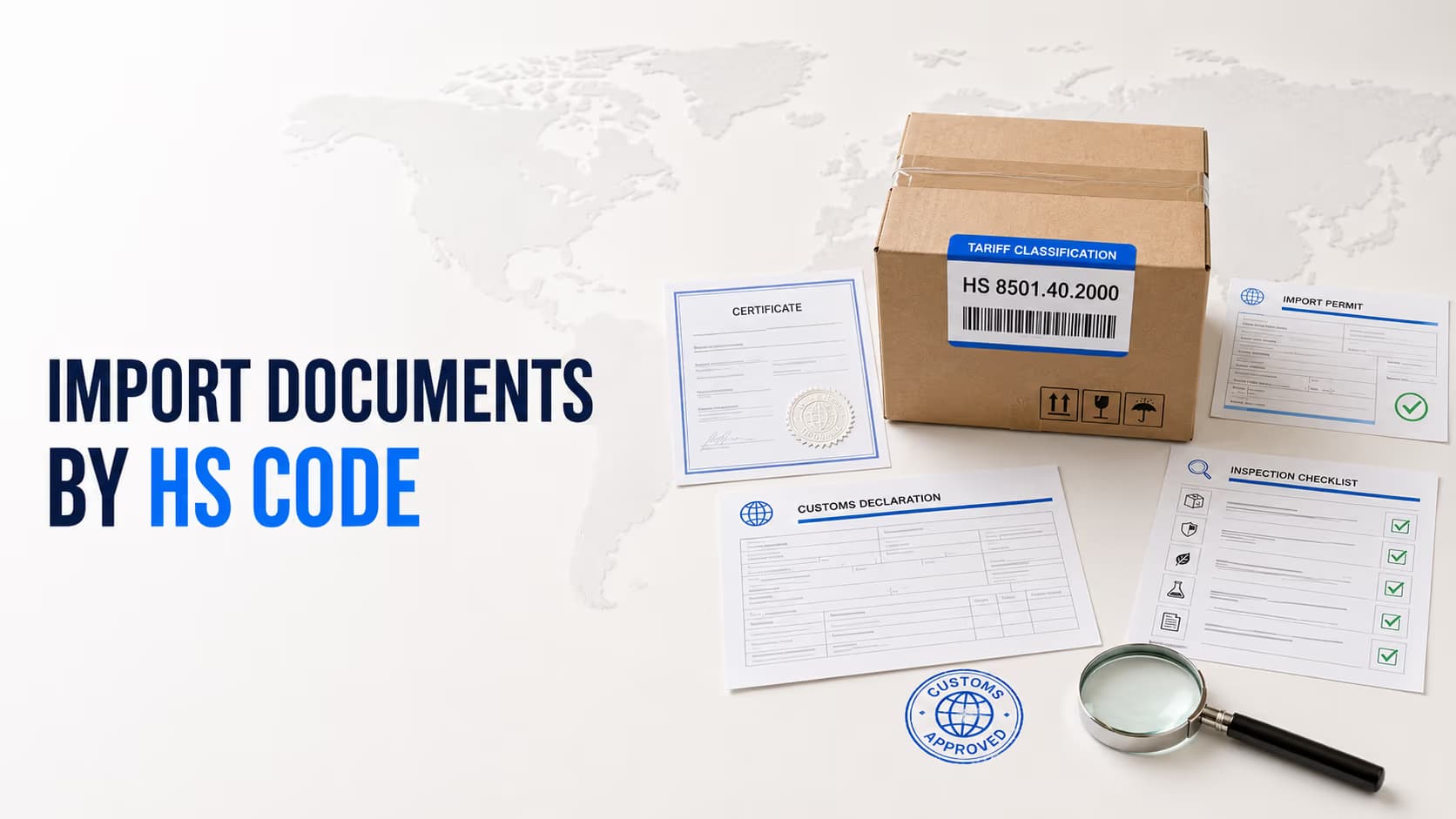
For the documents your product needs, see import documents by HS code.
Don't rely only on the supplier's code. Check it against the destination country's tariff schedule or with a broker. Start with how to find the right HS code. Note that the US uses 10-digit HTS numbers built on the 6-digit HS code (HTS vs HS code), and similar products can sit in different chapters: instant coffee is classified differently from green coffee beans.
Tariffs, anti-dumping duties and licence rules change. When a rate changes, recheck your landed cost: how to calculate import duty.
Most customs systems (such as ACE in the US) accept entry data before the goods arrive, so filing early starts the review sooner. A licensed customs broker can answer customs queries, such as a CBP Form 28 or 29, quickly and fix problems directly with officials.
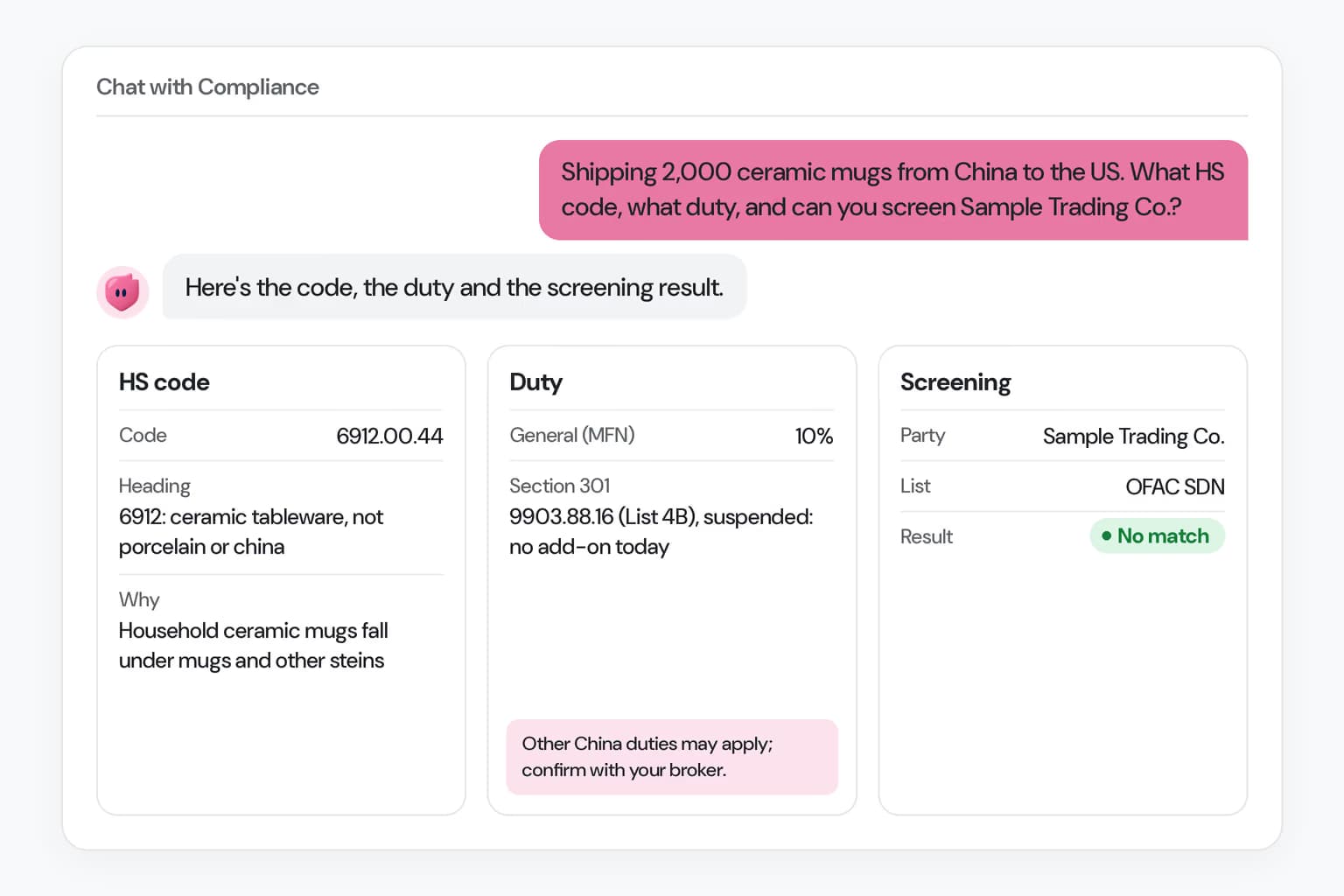
Many holds start before the package leaves: a wrong HS code, a duty nobody planned for, or a consignee nobody screened. Compliance, EximAgent's AI teammate for export compliance, runs those three checks in one chat.
Say you're about to ship earthenware coffee mugs from a factory in China to a US buyer. Before you book, you ask Compliance:
"Earthenware coffee mugs, China to the US. Which HS code and what's the duty? And can you screen Sample Trading Co.?"
Compliance replies with:
The material matters. Earthenware, stoneware and porcelain can have different classifications. Confirm the composition and intended use of your mugs before choosing the full code; a ruling on another product is a reference, not a classification decision for your shipment.
You then put the code on the commercial invoice and use the duty in your landed-cost quote. Compliance's results are advisory: confirm the full code for your shipment against the tariff schedule or with your broker, and leave final sanctions decisions to your compliance team. Compliance doesn't file customs entries or replace a licensed broker; it gives you and your broker accurate data to start from.
Before your next shipment, check the HS code, duty and consignee in one chat. Ask Compliance, free to start. Working in Cursor, Claude Code or Codex? Add the EximAgent connector or use the CLI.
The same checks run from a terminal with the EximAgent CLI:
curl -fsSL https://cli.eximagent.ai/install | sheximagent login(Windows PowerShell: irm https://cli.eximagent.ai/install.ps1 | iex)
eximagent hscode search --query "earthenware coffee mugs"eximagent tariff --exporter CN --importer US --product "earthenware coffee mugs"eximagent sanctions check --name "Sample Trading Co."To use Compliance inside an AI agent, add the hosted connector: in Claude Code, run claude mcp add --transport http eximagent https://mcp.eximagent.ai/mcp --scope user. For other clients, see the connector docs.
There is no published standard time; CBP releases a package once entry is accepted and any duties, documents or exams are resolved. Your carrier's tracking shows the current step.
Possible causes include missing or inconsistent documents, an incorrect HS code or declared value, unpaid duties and taxes, checks on regulated goods, or inspection. Ask the carrier or broker which issue applies to your shipment; the tracking label alone may not explain it.
It depends on the country, and the carrier's or customs notice states the deadline. In the US, entry must normally be filed within 15 calendar days of arrival, and goods left in CBP custody for six months can be sold.
Follow the carrier’s instructions and any stated deadline. If the expected delivery date has passed or no next action is clear, ask the carrier or broker to identify the missing document, payment or review. Follow a formal detention notice if one is issued. For recurring problems, see our guide to the five most common customs delays.
Yes. Look the product up in the destination country's tariff schedule, ask your broker, or describe it to Compliance for a suggested code and duty by route, then confirm the full code for your shipment.
EximAgent Research writes practical guides on finding buyers, reading trade data and checking HS codes, tariffs and sanctions.
Enter your email to receive the latest trade insights, guides, and HS-code explainers from EximAgent Blog.